DJ Website: What to Put on It and in What Order (2026)
What a DJ or electronic producer needs on a website and in what order: mixes, gigs, releases, a booking contact, a press photo and a mailing list.
On this page
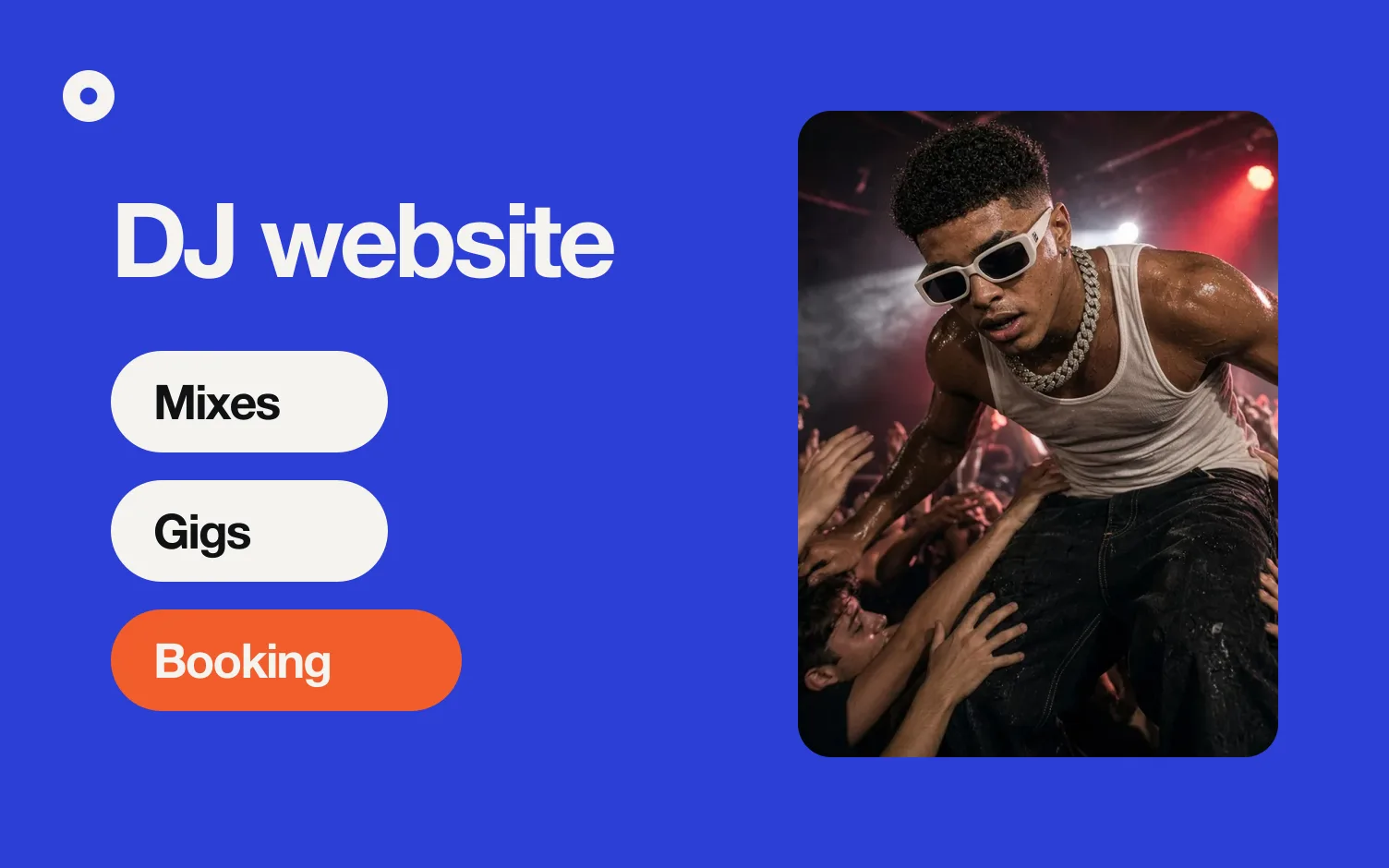
A DJ website needs five things: a mix or set people can press play on, your upcoming gigs with ticket links, a booking contact that is easy to find, a press photo with a short bio, and a way for fans to sign up so they hear when you play their city. Put the mix and the booking contact high on the page. Those are the two things a promoter came for.
Below: what a DJ site needs that a band site doesn't, the order that works, what to skip when you're starting, how much it costs and a checklist.
What should a DJ website have?
A DJ gets booked on the strength of a set. The site has two readers: a promoter or agent deciding whether to book you, and a fan deciding whether to come. Each one needs different things, and the page should serve both without making either dig.
- A mix or set to play. One embedded set from SoundCloud, Mixcloud or YouTube, near the top. Pick the one that sounds most like the night you want to be booked for.
- Upcoming gigs and residencies. Date, city, venue and a ticket button on each line. A residency can be one line that says where and how often.
- Releases and remixes. Your latest track or remix with buttons to the platforms where people listen, so a fan who liked a set can find the record.
- Booking contact. Name and email of your agent or manager, or your own if you book yourself. It should be visible without scrolling to the footer.
- A press photo and a short bio. Promoters copy these into flyers and listings. Two or three sentences and one good high-resolution photo save them an email to you (what goes in a press kit).
- Video clips from sets. A short clip of a crowd and a booth tells a promoter what your night looks like.
- A sign-up by city. Ask for an email and a city. When you add a date in Lisbon, the people in Lisbon hear first (how to start an email list).
In what order should the sections go?
A good order for a DJ is: a set to play, upcoming gigs, latest releases, video clips, fan sign-up, booking contact and bio. If most of your income comes from bookings, move the booking contact up to sit right under the set and gigs, and add a visible "Book me" button in the menu.
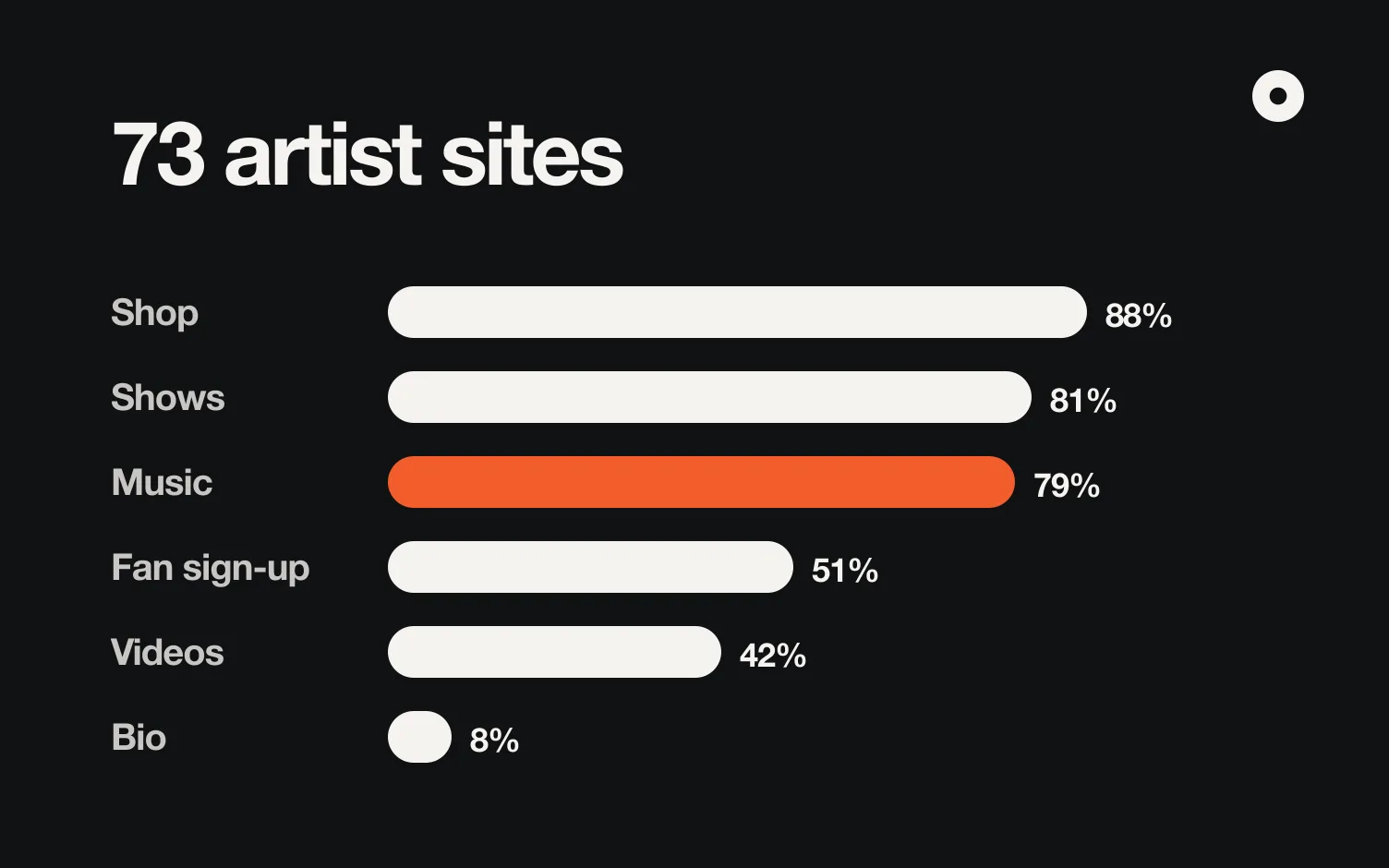
For a general view of how artist sites are ordered, see the musician website guide, which looks at 73 official artist sites. Electronic artists in that group tend to show their dates as plain text. A DJ site works the same way: simple, fast, and the next date is easy to find.
Do DJs need a website or is a link in bio enough?
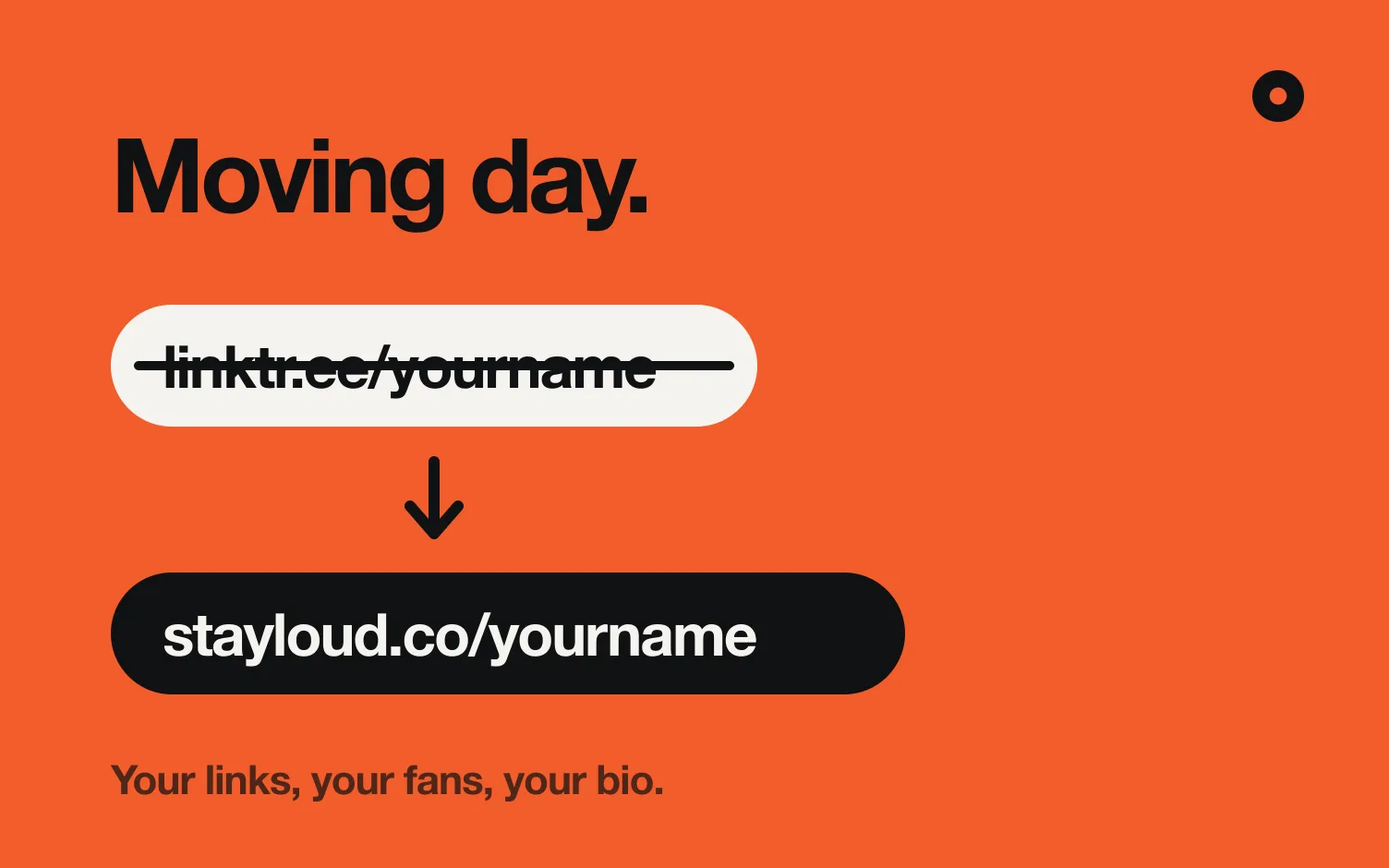
A link in bio is enough to start, and a website is worth having once you are being booked or want to be. A link in bio sends people to your latest links. It doesn't give a promoter a place to hear a full set, read your bio and find your agent in one visit, and it doesn't show up when someone searches your name. See do musicians still need a website for the longer answer.
If you already have a link in bio, keep it for Instagram. Use the website as the page you send to bookers and the one that appears in search.
What should a DJ website skip when starting?
- A shop. If you don't sell merch yet, leave the section out. An empty store makes the whole page feel unfinished.
- A long bio. Two or three sentences are enough. The long version goes in your press kit.
- Every mix you've ever made. Show the three that represent you best. A promoter will not listen to twenty.
- A tour section with no dates. Hide it until you have a date to show.
- Heavy visuals that slow the page. Promoters open the link on a phone between other things.
How much does a DJ website cost?
It ranges from free to a few hundred dollars a year, depending on what you pick. General website builders charge a monthly or yearly plan, and many add a fee for your own domain. A domain is usually the one cost you pay separately, and it is worth having, because yourname.com looks better on a flyer than a long builder address (how to use your own domain). Check each tool's current pricing on its own site before you decide.
Which tool should a DJ use to build one?
It depends on what your site is mostly made of.
- General builders such as Squarespace or Wix. They give you full control over the page and handle long embeds, galleries and a shop. They are the better fit if your work is mostly mixes and unreleased sets, since you decide exactly what goes where. The tradeoff is that you build and update everything yourself.
- Builders made for musicians, such as Bandzoogle. They come with music players, a tour section and a mailing list already in place. See website builders for musicians for how they compare.
- Loud. An independent musician searches one of their songs or their name, and Loud builds their website and link in bio with all their music, keeps them up to date with every release, and builds their fan list by city. It is built around released music, so if your work is mostly mixes that aren't on the platforms, a general builder may serve you better. If you release tracks and remixes regularly, it saves you the updating. There is no free plan: Pro is US$5 a month (US$48 a year) and Tour is US$15 a month (US$144 a year), with 14 days free when you subscribe.
How do I keep a DJ website up to date?
Each new gig and release needs to appear on the site, and this is the part most DJs let slip. A page that lists a festival from two summers ago tells a promoter you aren't active. Decide how you will update it before you pick a tool: by hand each time, or with something that follows your releases for you.
DJ website checklist
- One set or mix embedded near the top, the one that sounds most like your best night.
- Upcoming gigs, each with a date, city, venue and ticket link, or no gigs section at all.
- A booking contact with a name and an email, visible without scrolling to the footer.
- A press photo and a bio of two or three sentences.
- Your latest release or remix with buttons to the platforms.
- One or two short video clips from sets.
- A sign-up that asks for an email and a city.
- A menu of four to six items that works on a phone.
- Your own domain if you can.
- A plan for keeping gigs and releases current.
FAQ
What should a DJ website have?
A set to play, upcoming gigs with ticket links, your latest releases, a booking contact, a press photo with a short bio, a video clip or two and a fan sign-up with a city.
What goes first on a DJ website?
A mix or set people can play, followed by your upcoming gigs. If bookings are your main income, put the booking contact right after them.
Do DJs need a bio?
A short one. Two or three sentences and a good photo are enough for a promoter to write your listing.
Can I use SoundCloud as my website?
It works as a place to host mixes, and you can embed them on your site. It doesn't give promoters your gigs, contact and bio in one place.
Is a link in bio enough for a DJ?
It's enough to start. Once you want to be booked, a website gives promoters your set, bio and contact in one visit.